Australia Has More Solar Than Ever: What's Changing?
Australia’s solar market is evolving fast. Learn what rising rooftop solar, battery storage, changing tariffs and smarter energy use mean for homeowners.

Join Australia’s solar and battery revolution. Get A Free Quote
October 27, 2026
 Share


Australian homeowners considering a solar battery have an important date to keep in mind: 1 January 2027.
The Australian Government's Cheaper Home Batteries Program is continuing, but the financial support available through the scheme is scheduled to decrease at the beginning of 2027. For homeowners planning to add battery storage to an existing solar system or install solar and a battery together, understanding these changes now could help with budgeting and installation decisions.
With electricity costs, solar export rates and household energy needs continuing to influence the value of solar; the decision is no longer simply about whether to install a battery. It's also about choosing the right system, understanding the available incentive, and knowing when the new rules take effect.
So, what exactly is changing, and what should Australian homeowners do before January?
The Cheaper Home Batteries Program provides an upfront discount on eligible battery installations through Australia's Small-scale Technology Certificate (STC) mechanism.
The program began in July 2025 and continues to support eligible battery systems. However, changes introduced on 1 May 2026 established more frequent reductions in the support factor and different support levels according to battery capacity.
The next scheduled step-down takes effect on 1 January 2027.
| Installation period | STC factor |
|---|---|
| January–April 2026 | 8.4 |
| May–December 2026 | 6.8 |
| January–June 2027 | 5.7 |
| July–December 2027 | 5.2 |
Source: Australian Government Department of Climate Change, Energy, the Environment and Water.
The STC factor determines how many certificates an eligible battery can generate per kilowatt-hour of usable capacity. These certificates help fund the discount passed on to eligible customers.
The scheduled change from 6.8 to 5.7 represents a reduction of approximately 16% in the factor. However, this does not mean every homeowner's final rebate or installation price will decrease by exactly 16%. The actual discount depends on battery capacity, certificate value, and the applicable program rules.
The program is expected to continue beyond January 2027, with further scheduled adjustments through 2030.
The upcoming change matters most to homeowners who are already considering battery storage and want to understand the difference between installing under the current rules and waiting until 2027.
Three things deserve attention.
The current support factor is higher. Eligible installations certified under the applicable 2026 rules can receive support calculated using the 6.8 factor, compared with 5.7 from January 2027.
The final installation date matters. Signing a contract, paying a deposit or booking an installation does not automatically secure the current support level. The battery must meet the program's requirements, and its installation date is determined by the issue of the electrical compliance certificate or the applicable state or territory equivalent.
Installation schedules can be filled up. If you are considering installing a battery before the end of the year, check your installer's availability early. Do not assume that a quote or booking guarantees completion before the deadline.
The key is to plan rather than rush into a purchase that does not suit your home.
The federal program is designed to make eligible home battery storage more accessible by reducing its upfront cost.
Under the current rules, eligible systems generally need to meet the program's technical, capacity, and installation requirements.
Here is how the main features work:
| Program feature | What homeowners should know |
|---|---|
| Eligible battery capacity | Generally, 5 kWh to 100 kWh nominal capacity, subject to program rules |
| Capacity eligible for STCs | The first 50 kWh of usable capacity |
| Existing solar systems | Eligible batteries can be connected to qualifying existing solar PV systems |
| New solar systems | Eligible batteries can be installed alongside a new or replacement solar system |
| Discount calculation | Based on usable capacity, the applicable STC factor and certificate value |
| Battery sizing | Support is tiered by capacity, so larger systems do not receive the full rate across every kWh |
| Future changes | Support factors are scheduled to decrease over time through 2030 |
From 1 May 2026, the calculation also applies different rates to different portions of battery capacity:
This means choosing a battery based on your actual household needs is particularly important. A larger battery is not automatically the most cost-effective option.
Always confirm the current eligibility rules and an estimated discount with your installer before signing a contract.
Australia has a substantial rooftop solar market, but generating electricity during the day is only part of the equation.
Many households produce their greatest solar output around midday, while their electricity consumption increases in the late afternoon and evening.
Without a battery, excess solar power may be exported to the grid for a feed-in credit. The household may then need to buy electricity back after sunset.
A home battery can help bridge that gap.
Actual savings depend on your consumption, battery size, system efficiency, electricity rates, feed-in tariff, installation cost, and how often the battery is used.
A battery is not guaranteed to pay itself within a particular period, so an individual assessment is important.
For some households, installing before January could provide a higher eligible discount. For others, waiting may make sense if they need more time to compare systems, save for the installation or assess their energy requirements.
Consider these factors before deciding
| Consideration | Why it matters |
|---|---|
| Current quote | Confirm the upfront price and the discount included |
| Installation timing | Ask whether the system can realistically be installed and certified before 31 December 2026 |
| Battery size | Match capacity to your solar generation and household consumption |
| Warranty | Check the product warranty and performance conditions |
| Installer credentials | Confirm the installer is appropriately accredited |
| Payback estimate | Request a calculation based on your own usage and electricity plan |
| Future energy needs | Consider EV charging, heating, cooling and other major appliances |
Important: Do not choose an unsuitable system just to meet a deadline. A smaller, well-matched battery may deliver better value than an oversized system purchased in a hurry.
The federal battery incentive is not scheduled to disappear on 1 January 2027.
Instead, the STC factor is scheduled to step down from 6.8 to 5.7 for January–June 2027, followed by another reduction to 5.2 for July–December 2027.
The program is scheduled to continue with further reductions through 2030, subject to the applicable rules and any future government changes.
This distinction matters because headlines about a rebate “ending” can create unnecessary confusion. Homeowners should understand the difference between a program ending and its discount becoming smaller.
State and territory incentives, electricity plans, and other offers may also differ. Check which benefits apply to your location and whether they can be combined.
If battery storage is on your list, taking these steps now can help you make a more informed decision.
Step 1: Review your electricity bills. Look at your daily consumption, evening usage, electricity rates, and solar feed-in credits.
Step 2: Check your solar system. Confirm your inverter specifications, solar generation and compatibility with a proposed battery.
Step 3: Compare multiple quotes. Ask for the battery price before and after the incentive, installation charges, and any additional fees.
Step 4: Confirm the rebate calculation. Request the estimated discount under the applicable STC factor and battery-capacity tiers.
Step 5: Ask about the deadline. Confirm whether the installer can complete the work and provide the required electrical compliance certificate before 31 December 2026.
Step 6: Review the expected savings. Request a realistic payback estimate based on your own energy usage rather than a generic savings claim.
Step 7: Check product and installer credentials. Verify that the battery is on the applicable approved product list and that the installer holds the required accreditation.
At Solar Secure, we understand that choosing a solar battery involves more than comparing prices or focusing on a rebate deadline.
The right solution should suit your home's energy consumption, existing solar systems, and future electricity needs.
Whether you're considering a battery for an existing solar installation or planning a new solar and battery system, our team can help you explore suitable options and understand the key considerations before deciding.
If you're planning to install a battery before January 2027, start by requesting a quote, confirming your eligibility, and discussing realistic installation timeframes.
The goal is to make an informed investment, not a rushed one.

Australia's Cheaper Home Batteries Program is changing, and 1 January 2027 is the next scheduled step-down date.
For eligible homeowners, the current STC factor of 6.8 is scheduled to fall to 5.7 at the start of 2027. The federal program will continue, but the discount calculation will change.
If you're already considering battery storage, now is a sensible time to compare quotes, assess your household's energy needs, and confirm whether installation before the end of December is realistic.
A well-sized battery, a suitable electricity plan, and a clear understanding of the incentive can help you make a better long-term energy decision.
Thinking about adding a battery to your home? Contact Solar Secure to discuss your options and plan your next step.
Reach Out to SunSelect at 1300 867 353 for Expert Guidance and Money-Saving Options. Explore the Reviews from Our Delighted Customers on ProductReview.com.au.
Make the smart move to energy independence with our solar batteries
Ask Our Battery Expert

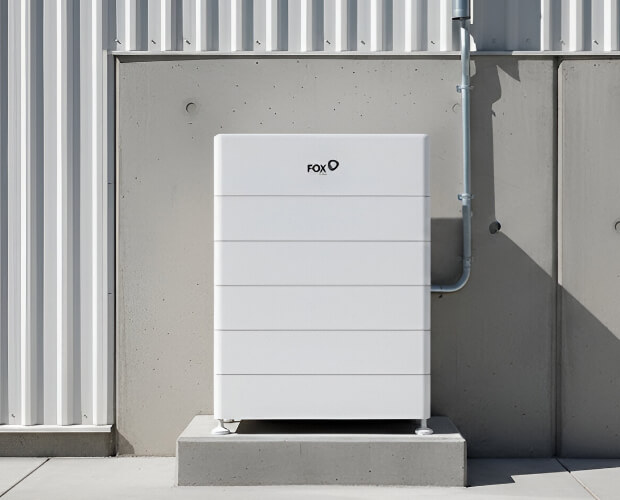
Store your excess solar energy, cut peak rates, and protect your home from outages.
Get a free quote tailored to your location
100% Free Quote. No Obligation.
We respect your privacy.

Enter your postcode to see available offers in your area.



NSW Home Energy Saver Loan Program
Available from 17 June 2026